

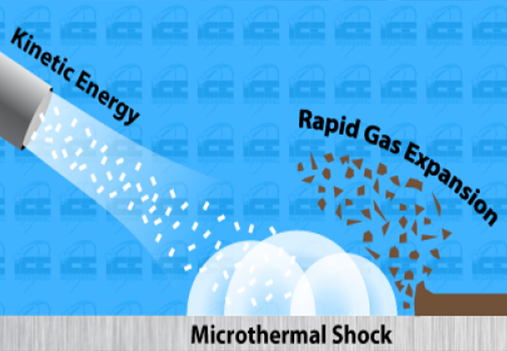
Dry ice blasting may look simple on the surface, but it’s backed by advanced physical and chemical principles that make it incredibly effective. This cleaning method uses compressed air to accelerate solid carbon dioxide (CO₂) pellets toward a surface at high speed. What happens next is a three-step cleaning process that leaves no residue behind.
1. Thermal Shock Effect
When the dry ice pellets hit a dirty or contaminated surface, they immediately cause a rapid temperature drop. This temperature difference creates a thermal shock between the contaminant and the underlying surface, causing the bond between them to weaken.
- Surface temperature can drop by up to 70°C in milliseconds
- Helps lift off grease, oil, paint, and biofilm
- Ideal for delicate components and electronics
2. Micro-Impact Kinetic Energy
The dry ice particles impact the surface with high kinetic force, which helps dislodge particles without damaging the substrate.
- Non-abrasive but powerful
- Cleans complex shapes, crevices, and hard-to-reach areas
- No scratching, scraping, or residue
3. Sublimation Reaction
As soon as the dry ice hits the surface, it sublimates—meaning it instantly transforms from solid to gas without passing through a liquid phase. This rapid gas expansion helps lift and carry away loosened debris.
- No water or moisture involved
- No secondary cleanup required
- Completely dry and residue-free process
Environmentally Friendly by Design
Dry ice blasting uses recycled CO₂, making it an environmentally safe solution. It produces no toxic chemicals, no hazardous runoff, and no additional waste materials.
- Compliant with EPA, FDA, and USDA regulations
- Safe for indoor use
- Ideal for sustainable operations
Conclusion
Dry ice blasting is not just about removing dirt—it’s a precise, science-based cleaning process that protects your equipment, improves productivity, and supports a safer workplace. By understanding how it works, you can appreciate why more industries are making the switch.
Contact us today to learn how this technology can benefit your operations.